I Moved Countries With Two Suitcases — and What Actually Holds a Life Together Isn’t What You’d Think
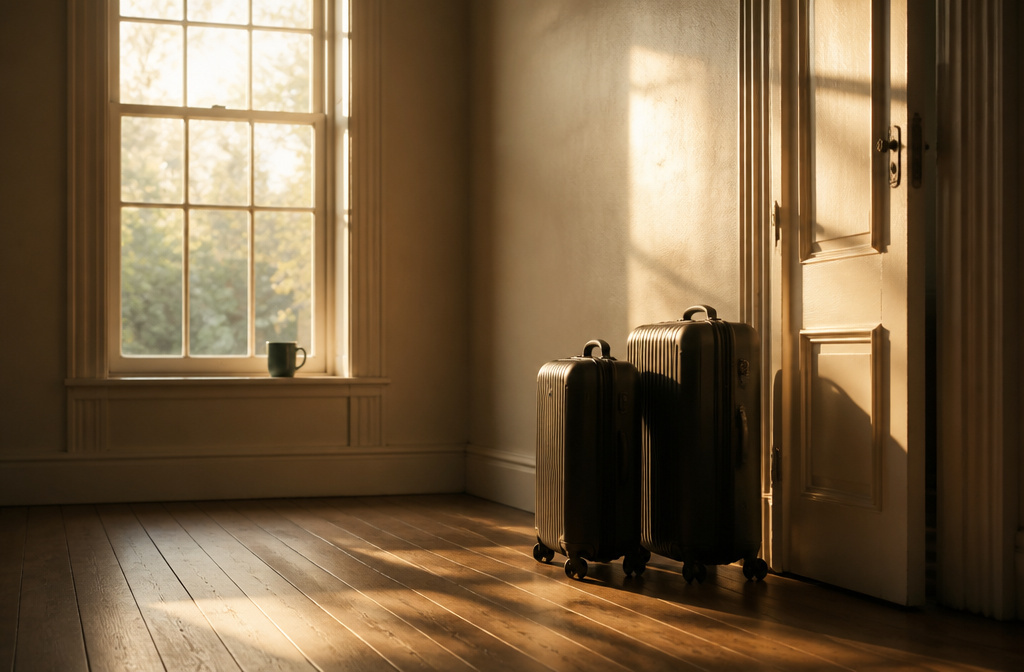
A few years ago I moved to another country with two suitcases.
Not for a summer, but to live.
Everything I was taking had to come in under the airline’s weight limit, so for about a week I went round my flat picking things up and putting most of them back down.
You learn something doing that which no article about decluttering ever taught me.
When you can only take a little, you find out fairly quickly what you actually use a home for.
Most of what I owned, it turned out, I didn’t.
The expensive things mostly stayed behind, and I don’t miss them.
So did a lot of the useful ones, the things I was sure I’d need and then never once went looking for.
What I carried in the end was a fairly random-looking set of objects that wouldn’t be worth much to anyone else.
They were the things that made a bare rented room feel like mine, sooner than I expected.
I’ve thought since about why those particular ones earned their place, and there is a pattern to it.
The Things That Make a Room Yours
An empty rented place feels like nobody’s home for the first while.
What settles that fastest is a few small familiar objects, set out where you can see them.
A mug you like, a couple of photographs, a book you’ve already read twice.
I’d pack those first, before anything sensible, because they do the real work of turning a place into somewhere you live.
They cost almost nothing, which is probably why they’re the easy ones to leave behind.
The Ordinary Things You Actually Use
The next lot that held was the small kit of my real day, not my imagined one.
The knife I cook with, the pen I write with, the one pair of shoes I actually wear.
We pack for the person we’re hoping to become once we get there.
But it’s the worn, ordinary things you already reach for that let you keep living like yourself while everything else is unfamiliar.
The nicer version I never used at home did not suddenly get used abroad.
I should have known that, and I brought some of it anyway.
The Ones That Are Really People
Some of what I brought wasn’t useful at all.
It was people, more than objects.
My grandmother’s little dish, a book with a friend’s note inside the cover, a photo from a day I didn’t want to lose.
They weigh almost nothing and I would never leave them, because once you move far away they become most of what still ties you to everyone back home.
You can find another table anywhere.
Not the dish.
The Boring Things That Hold It All Up
None of the good things help if you forget the dull ones.
Documents, the chargers that fit the devices you actually brought, the keys and cards and paperwork that let a new life begin on paper.
I’d be careful not to make this part sound romantic, because forgetting it turns a fresh start into a month of queuing at a government office in a language you’re still learning.
So the honest answer has two halves.
A few things for you, and a small dull folder of things for the bureaucracy.
Pack the folder as carefully as the mug.
What It Taught Me
The thing I took from it wasn’t really about moving, and it wasn’t quite about minimalism either.
It was that whatever holds a life together was almost none of what I’d spent money on.
The cheap things, the worn ones, the sentimental ones, and a bit of paperwork.
Everything else, which was most of what I’d owned, I managed fine without.
I don’t own much more now than I did when I landed.
For a long time I read that as something I’d given up, and at some point I stopped.
If you’ve ever slept in a room that isn’t home yet, I’ve written about the loneliness that tends to come with it, because the empty shelves are only part of it.
You Don’t Have to Move to Try This
You don’t need to leave the country to run the test.
Look around the room you’re in and ask which few things you’d carry down the stairs first if you had to move tomorrow with two cases and nothing else.
That short list is the part of your home actually holding your life together.
The rest is around it, and most of it you’d replace without much thought.
That’s more or less all anyone useful means by owning less, underneath the tidier versions of it.
Keep the rest if you want to.
You just stop mistaking it for the part that matters.
The Point
Two suitcases sounds like a story about giving things up.
For a while I thought that’s what it was.
Mostly it showed me how little it takes to feel like myself, once I knew which little that was.
That’s about all it comes down to.
Frequently Asked Questions
What should you pack first when moving abroad long-term? The small familiar things that make a strange room feel like yours: a favourite mug, a few photographs, a book you’ve read before. They’re cheap and easy to overlook, but they do more than any furniture to make a new place feel like home.
What possessions actually matter most when you downsize? Not the valuable ones, and often not the most useful ones. In my case it came down to four kinds of thing: what made a room feel like home, the worn tools of my real routine, objects tied to particular people, and the dull essentials like documents and chargers. Most of a normal home is none of those.
Is it worth bringing sentimental items when space is tight? Yes. They weigh almost nothing and carry the most, because they’re the thread back to the people and places you’ve left. You can rebuy furniture anywhere. You can’t replace a grandmother’s dish.
How do you decide what to keep and what to leave? Ask which few things you’d carry down the stairs first if you had to move tomorrow with only two cases. That list is what’s genuinely holding your life together. Most of the rest you’d replace without thinking about it.
Does moving with less actually make you happier? Sometimes, though not the way it’s usually sold. It’s less about the number of things and more that when everything you own means something, the stuff stops sitting on you. That shift tends to matter more than how many boxes you end up with.
What’s the one thing people forget when packing for a move abroad? The dull essentials — documents, the right chargers, keys and cards and paperwork. It’s easy to focus on the meaningful things, but forgetting the practical layer turns a fresh start into weeks of bureaucracy in a language you may not speak yet.