Lemon Butter Shrimp and Asparagus for Two
If you’re like me, the nights you most need a real dinner are the nights you have the least energy to cook one.
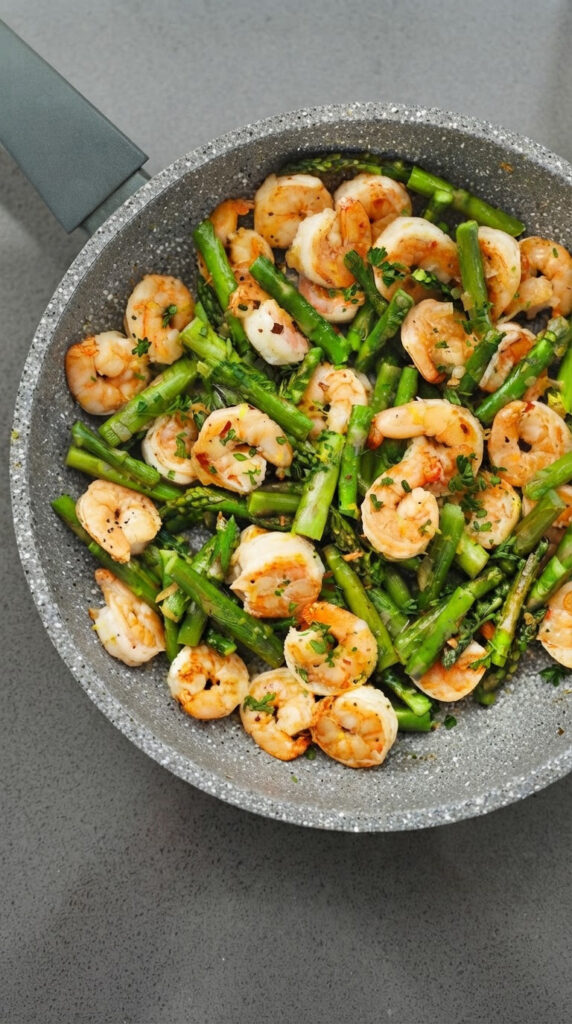
This lemon butter shrimp and asparagus for two is made for exactly those nights.
It’s bright, buttery, and a little garlicky, the kind of plate you’d happily order at a seafood restaurant.
It takes one skillet and about 15 minutes, which makes a regular Tuesday feel like a small occasion.
Why You’ll Love It
- Five ingredients plus oil, salt, and pepper.
- One skillet, about 15 minutes.
- Written for two servings.
- The shrimp cook last, so they go straight from the pan to the plate.
- Naturally low-carb and gluten-free.
Ingredients
8 oz large raw shrimp, 16/20 or 21/25 count, peeled and deveined
8 oz asparagus, about half a bunch, woody ends snapped off, cut into 2-inch pieces
2 tablespoons unsalted butter
3 garlic cloves, minced
1 lemon
1 tablespoon olive oil, divided
1/2 teaspoon kosher salt, divided
1/4 teaspoon black pepper
Steps
1. Pat the shrimp very dry with paper towels and season them with 1/4 teaspoon of the salt and the pepper. Wet shrimp steam in the pan instead of searing. Zest the lemon, then cut it in half. Juice one half, which gives you about 1 1/2 tablespoons, and cut the other half into wedges.
2. Heat 2 teaspoons of the oil in a 12-inch skillet over medium-high heat until it shimmers. Add the asparagus in a single layer with the remaining 1/4 teaspoon of salt. Cook for 3 to 4 minutes, tossing now and then, until it’s bright green with a few browned spots and crisp-tender. If your spears are thick, add 1 tablespoon of water and cover the pan for the last minute. Move the asparagus to a plate.
3. Add the remaining teaspoon of oil to the pan. Lay the shrimp in a single layer and leave them alone for 1 1/2 to 2 minutes, until the undersides are golden-pink. Flip them.
4. Turn the heat down to medium. Add the butter and garlic and spoon the melted butter over the shrimp for 45 to 60 seconds, until the garlic is fragrant but not brown and the shrimp are opaque all the way through. Shrimp are done when they curl into a loose C shape. A tight O means they’ve gone too far.
5. Take the pan off the heat. Add the lemon juice and zest, return the asparagus, and toss everything in the butter. Taste for salt and serve right away with the lemon wedges.
Helpful Tips and Substitutions
Cooking the shrimp last is the reason this works. Shrimp go from done to rubbery in about a minute, and when they’re cooked first and set aside, they have to be warmed up again at the end and usually overcook. Asparagus holds fine on a plate for a few minutes.
Oil does the searing and butter makes the sauce. Butter goes in after the heat comes down because its milk solids burn at searing temperature.
The lemon goes in off the heat. Juice that hits a very hot pan cooks off and tastes dull, and the acid tightens the shrimp if they’re still cooking.
Buy large shrimp, labeled 16/20 or 21/25. They take long enough to cook through that you have some margin. Small shrimp overcook before they brown.
Frozen shrimp are fine. Thaw them in a bowl of cold water for about 15 minutes, then dry them well.
If you’re not serving it with a side, go up to 12 oz of shrimp. It still fits in a single layer in a 12-inch pan, and the cooking times stay the same.
Use fresh garlic, not jarred. Jarred garlic burns faster and tastes harsher.
Green beans work in place of the asparagus. Trim them and cook them for 5 to 6 minutes in step 2 instead of 3 to 4.
Serving Ideas
Over a small pile of orzo, rice, or angel hair, with the butter from the pan spooned on top.
With crusty bread for whatever butter is left in the skillet.
Over a handful of arugula as a warm salad. The lemon butter is enough dressing.
Make-Ahead and Storage
Trim and cut the asparagus up to two days ahead and keep it in the fridge in a container lined with a paper towel.
This is best eaten right away. Leftovers keep in an airtight container in the fridge for 2 to 3 days.
Reheat gently in a covered skillet over low heat with a few drops of water, just until warm. High heat or a full-power microwave overcooks the shrimp.
Leftovers are also good cold, chopped into a salad.
Don’t freeze it. The asparagus turns limp and watery after thawing.