This Is Why You Get Super Productive Right Before a Deadline
If you’re like me, some of your best work has happened in a mild panic the night before it was due.
I can spend whole calm weeks barely touching a thing, then do the entire project between 9pm and 2am the night before.
For years I felt a bit ashamed of that, like it meant I had no discipline.
It turns out there’s nothing wrong with you and me, and there are a few very real reasons the deadline flips a switch that willpower alone never quite manages.
Work Expands to Fill Whatever Time You Give It
There’s an old observation called Parkinson’s Law: work expands to fill the time available for it.
Give yourself two weeks for a task and it somehow takes two weeks. Give yourself one evening and the very same task folds neatly into one evening.
The deadline isn’t really making you faster.
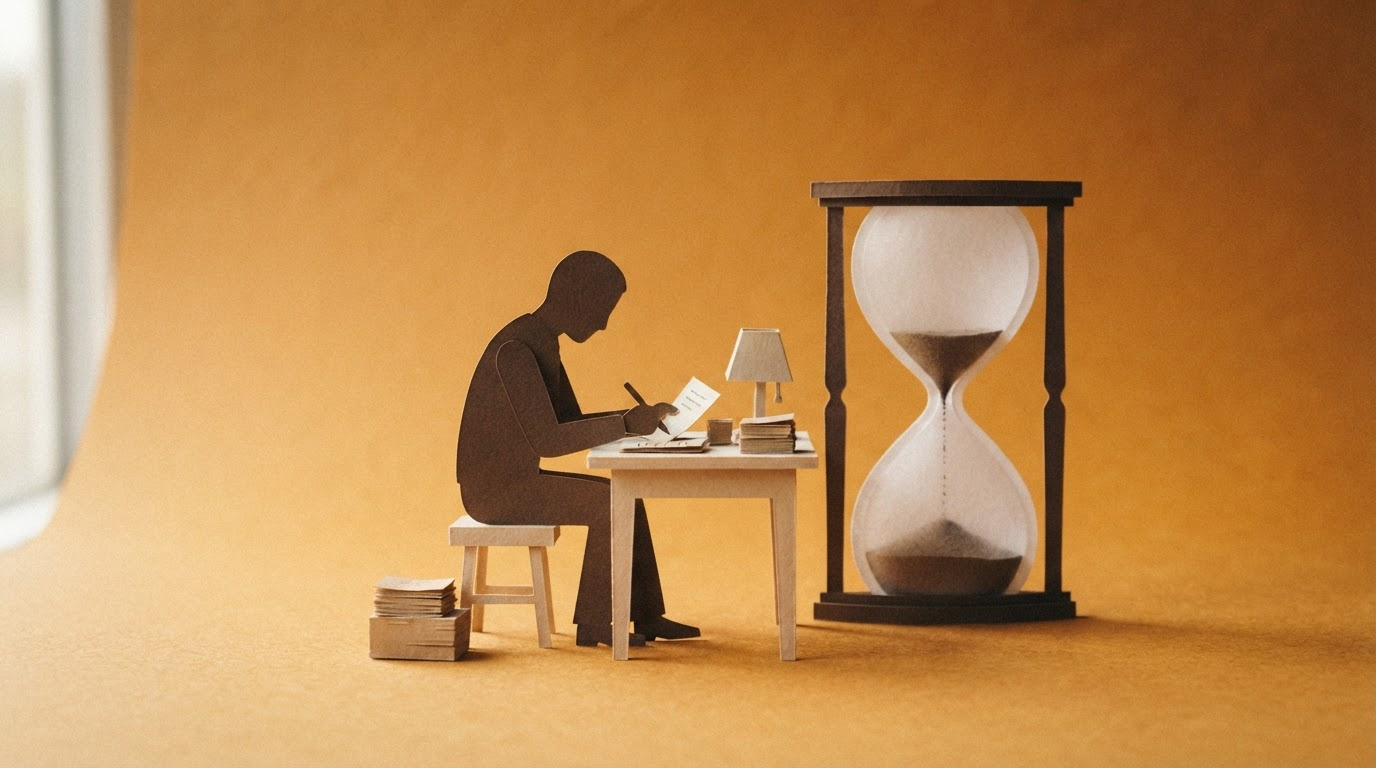
It’s shrinking the container, so the work finally has to fit into something smaller.
A Little Pressure Is Where Your Focus Lives
Psychologists have a name for the sweet spot, too, the Yerkes-Dodson law, which says we perform best under a moderate amount of pressure, not too little and not too much.
With no pressure at all your attention wanders and everything feels optional.
As the deadline closes in, the pressure climbs into that sweet spot, and suddenly you’re locked in, sharp, and strangely happy to ignore your phone.
Push it too far, into real panic, and it tips back into a mess, which is exactly why the all-nighter from hell so rarely produces your best work.
The Deadline Quietly Kills Your Perfectionism
Most of what slows us down isn’t the work itself. It’s the fussing around it.
Oh and trust me, I know about it a little too well.
Rewriting the first sentence six times, looking up one more thing, waiting to feel ready.
Yep, doing it all the time.
When there’s no time left, all of that simply falls away, because you can’t afford it anymore.
You stop trying to make it perfect and start trying to make it done, and “done” turns out to be most of the battle.
Suddenly There’s Only One Thing to Do
For weeks the task sat in a long list of maybes, quietly competing with everything else you could be doing instead.
Right before the deadline, that whole noise vanishes, and there’s exactly one thing that matters.
That clarity, of simply having no choice, is a huge part of why the final hours feel so strangely easy.
How to Get the Effect Without the 2am Despair
Here’s the useful bit, because you don’t actually have to keep leaving everything to the last night.
The deadline is what’s doing the work, so you can build little deadlines on purpose: give a task one hour instead of a whole open afternoon, and treat that hour like it’s real.
Break a big thing into small pieces with their own tiny due times, and tell an actual person you’ll send it by Friday, because a promise to someone is just a deadline with a face.
The aim is a bit of pressure, not a mountain of it, that same Yerkes-Dodson sweet spot, so you get the focus without the despair.
And Remember
Being productive right before a deadline doesn’t mean you’re lazy the rest of the time.
It means you respond beautifully to structure, and those calm weeks only felt slow because nothing was giving your focus a shape to fill.
So you can let go of the guilt about your inner deadline gremlin, and start handing yourself smaller deadlines before the big one lands.
You were never undisciplined. You were just waiting for a container.
Sources: Parkinson’s Law, from Cyril Northcote Parkinson’s 1955 essay in The Economist; and the Yerkes-Dodson law (1908) on the link between moderate arousal and peak performance.