What to Do With the Sentimental Things You Can’t Throw Away and Can’t Keep
Almost everyone has a box, or a drawer, or a whole cupboard, of things they can neither use nor get rid of.
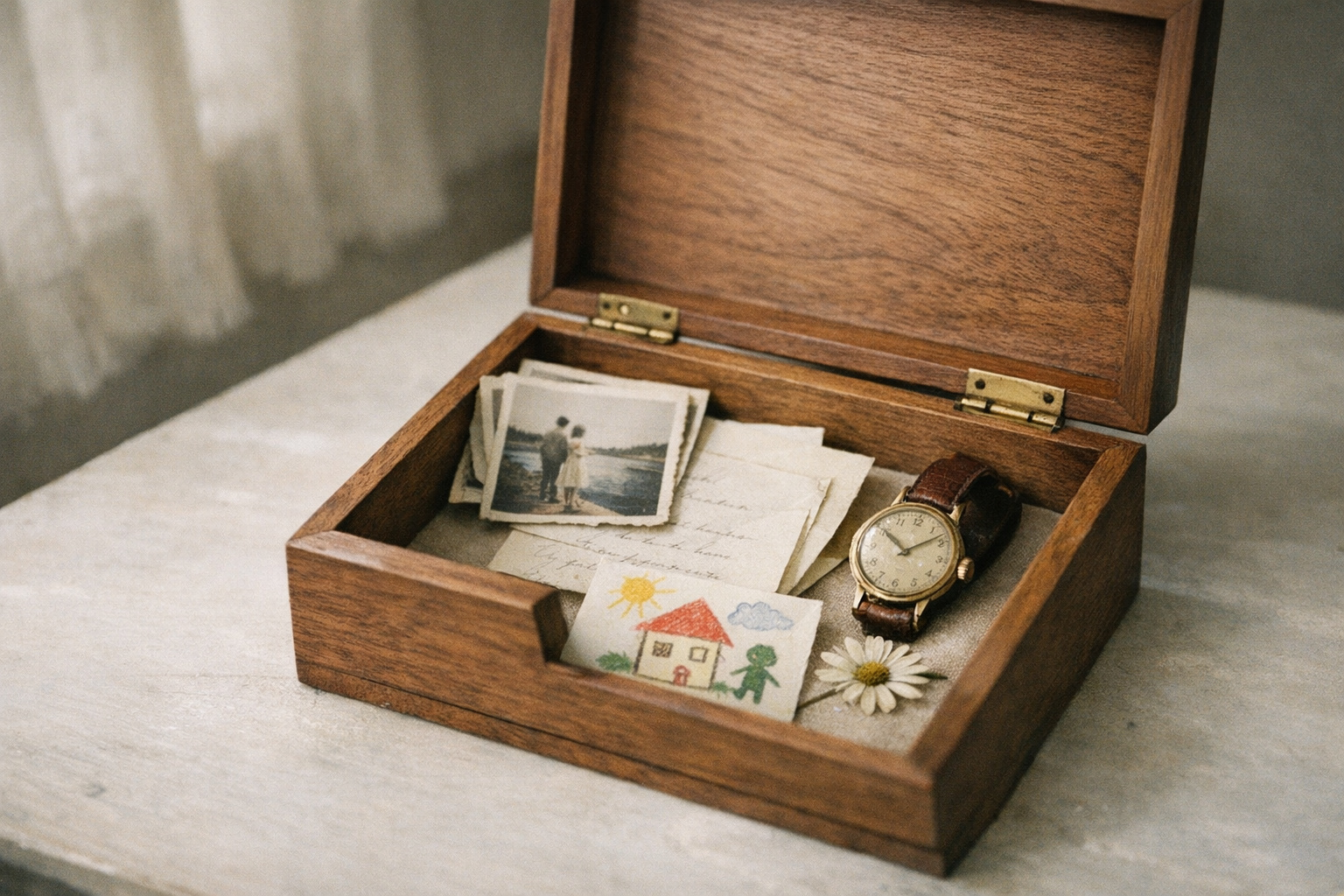
A parent’s watch, a child’s first drawings, letters from someone who’s gone, a jumper that still smells faintly of a person.
You can’t throw them out, because it feels like throwing out the person.
And you can’t quite keep them either, because the pile only grows, and half of it you never actually look at.
So it sits there doing nothing, and makes you feel a little guilty every time you open the drawer.
There is a way through it, and it starts with one change in how you think about the objects.
Get This One Thing Straight First
These things are hard because we treat the object and the memory as if they were the same.
They aren’t.
The memory of your grandmother doesn’t live inside her chipped teapot.
It lives in you, and it stays there whether or not the teapot is in your cupboard.
Once you separate the two, most of the pile gets easier, because the question changes.
It stops being “can I bear to lose this person,” which is unanswerable, and becomes “do I actually need this particular object to keep them,” which you can answer.
Sometimes the answer is yes, and you keep it, with no guilt at all.
Often the answer is no, and that’s where the rest of this helps.
Photograph It, Then Let It Go
For a lot of sentimental things, it’s the sight of them that holds the memory, not the thing itself.
Take a good photo of it in decent light, and add a line about why it mattered.
Keep the photo somewhere you’ll actually see it, and let the object go.
This works best for the bulky things you’d never display anyway: the old trophy, the inherited furniture, the children’s artwork by the boxful.
You keep the whole memory and none of the space it was eating.
Keep One, Not the Whole Set
You don’t need all forty of your child’s drawings to remember they were once small.
Pick the two or three that make you smile most, and frame or file those properly.
The same goes for a relative’s belongings: one meaningful piece, kept and used, holds more than a garage full of boxes you never open.
Use It Instead of Storing It
A thing in a box does nothing for you or the person it belonged to.
The same thing in your daily life keeps them near in a way storage never does.
Wear the watch, drink from the mug, put the scarf on.
If something feels too precious to use, it’s worth asking whether “too precious” is really just guilt wearing a nicer name.
Give It to Someone Who Actually Wants It
Some things you’re keeping out of duty rather than love.
The heirloom that isn’t to your taste, the collection you inherited and never wanted.
Passing it to a relative who would treasure it, or someone who collects exactly that, is not a betrayal.
It gives the object a life again instead of a shelf, and you can always ask around the family first so no one is hurt.
Give the Memory Box a Real Limit
Not everything needs a clever solution. Some of it just needs a box.
Give yourself one actual box, a fixed size, and let the genuinely irreplaceable things live in it.
The only rule is that they have to fit.
When it’s full, keeping something new means choosing what it replaces, which is a far kinder way to decide than trying to keep everything forever.
The Hardest One: The Things of Someone Who Died
This one deserves more time and less pressure than any other.
Don’t make these decisions in the first raw months, when it feels like everything has to be kept.
Wait until the grief has settled a little, and then go slowly.
Keep the few things that really carry them: a garment you’ll wear, an object you’ll use, something in their handwriting.
Letting the rest help someone else, through a charity or a person who needs it, is often exactly what they would have wanted.
There’s no prize for keeping everything, and no shame in keeping only a little.
When the Guilt Is the Real Problem
Often the hard part isn’t the object at all, it’s the fear that letting go means you didn’t care enough.
It doesn’t.
A cupboard kept shut on a pile you never look at isn’t love, it’s avoidance.
Choosing a few things that genuinely mean something, and looking after them properly, honours a person more than burying them under everything else you kept.
When I moved abroad I could only bring a handful of these things, and it made the choosing sharper than it had ever been, which is part of what I learned about the possessions that actually hold a life together.
The Point
You can’t keep everything, and admitting that doesn’t mean throwing the memories out.
The memory was never in the object.
Keep the few things that genuinely carry a person or a time, use them, look after them, and let the rest go.
You’ll remember them just the same, and the drawer will stop making you feel bad every time you open it.
This is the gentlest corner of owning less, and usually the last one people get to, because it’s the one that isn’t really about stuff at all.
Frequently Asked Questions
How do you get rid of sentimental items without guilt? Separate the memory from the object. The memory lives in you, not in the thing, so keeping a few meaningful pieces and letting the rest go doesn’t erase anything. Photographing an item before you release it helps, and so does knowing it’s gone to someone who’ll use it.
What should you do with a loved one’s belongings after they die? Don’t decide in the first raw months. Wait until the grief settles, then keep a few things that truly carry them — something to wear, something to use, something in their handwriting — and consider letting the rest help someone through a charity. Keeping only a little is not a betrayal.
How many of my child’s drawings should I keep? Not all of them. Choose the two or three that mean the most and keep those properly, framed or filed. Photograph the rest so you lose nothing, then recycle them. A small, curated few is easier to treasure than a box you never open.
Is it wrong to give away things I inherited? No, especially if you’re keeping them out of duty rather than love. Passing an heirloom to a relative who’d treasure it, or someone who collects exactly that, gives it a real life again. Ask the family first so no one is caught off guard.
How do I keep sentimental things without the clutter? Use a memory box with a fixed size and let only the irreplaceable things live in it. When it’s full, something new can only go in if something else comes out. For everything else, photograph it or put it to daily use rather than into storage.
What do I do with old cards and letters? Keep the handful that genuinely move you and photograph the rest. If the words are what matter, a clear photo preserves them completely while freeing the drawer. Letters from someone who’s gone can go in the memory box, within its limit.